
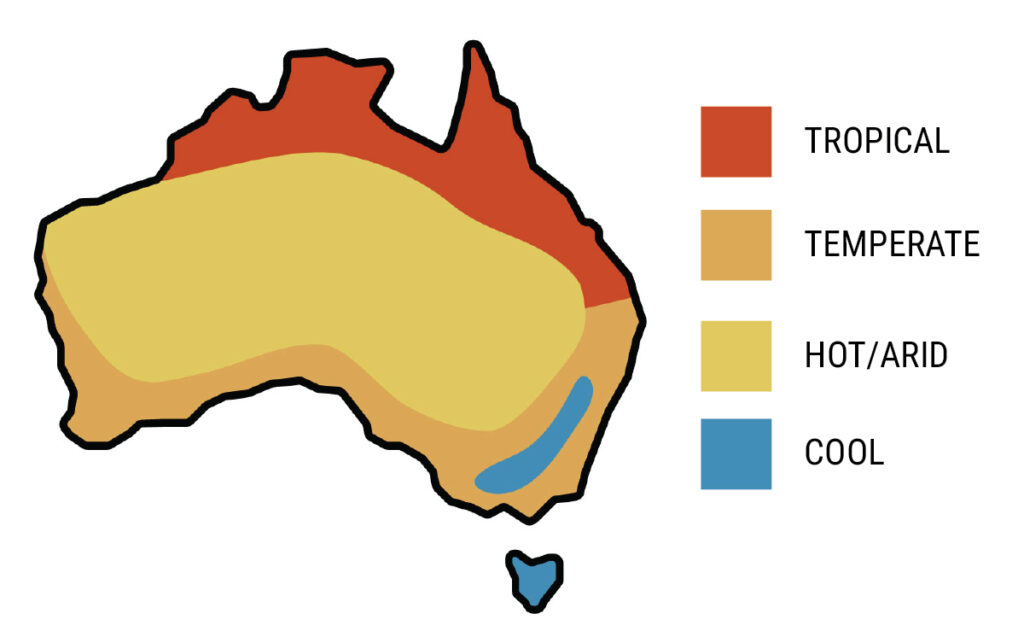
Climate Zones – Map Disclaimer
With Australia’s diverse terrain, our map of climate zones should be used as a guide only. Your own micro-climate will vary depending on your land’s exact position within a zone and many locations will receive weather different than what would typically be associated. If you are still unsure of what to plant, you can always reach out to us, ask a neighbour or contact your local gardening group.

Understanding The Australian Climate Zones Map
Australia’s vast landscape is home to a wide range of climate zones, each influencing how and when you should plant your seeds. From the tropical north to the cool temperate south, knowing your climate zone helps you choose the right varieties for your garden and achieve stronger, healthier harvests.
We are passionate about helping Australian gardeners grow with confidence, no matter where they live. Our simple climate zone guide breaks the country into four main regions: tropical, temperate, hot/arid and cool. Each zone experiences different temperatures, rainfall patterns, and growing seasons, meaning some plants will thrive while others may struggle. For example, tropical regions such as northern Queensland enjoy warm, humid conditions ideal for crops like okra, chillies, and eggplant. Temperate areas in southern Australia suit leafy greens, peas and brassicas through the cooler months, while hot/arid zones benefit from heat-tolerant varieties such as melons and sunflowers.
By matching your planting schedule and seed choice to your local climate, you’ll make the most of every season and save time, water and effort along the way. Our easy-to-use climate zone map and seed descriptions are designed to take the guesswork out of sowing seeds. Whether you’re tending a backyard veggie patch, a balcony garden or a small farm, understanding your Australian climate zone is the first step towards a more productive and sustainable garden. Every seed packet you receive will also display a climate zone map and information as a reminder.
Before getting out into the garden, we usually check the ‘Bureau Of Meteorology‘ website to keep up to date with what’s happening in our region. We’ve added the link for you too BUREAU OF METEOROLOGY.